
Is VPN Safe to Use in India? The 2026 Privacy Advocate’s Reality Check
In 2026, the question “Is a VPN safe to use?” has evolved from a simple technical query into a complex legal and architectural calculation for Indian users. While the underlying encryption of top-tier VPNs remains virtually unbreakable by classical computers, the “safety” of your personal data now depends entirely on whether your provider complies with the rolling 180-day CERT-In log mandates or operates outside of Indian jurisdiction through virtual infrastructure.
The 2026 Logging Paradox: CERT-In and Your Data
The legal landscape in India has created a “logging paradox” where the tool designed to protect your privacy could theoretically be used to monitor it under state mandate.
The 180-Day ICT and 5-Year Subscriber Mandate
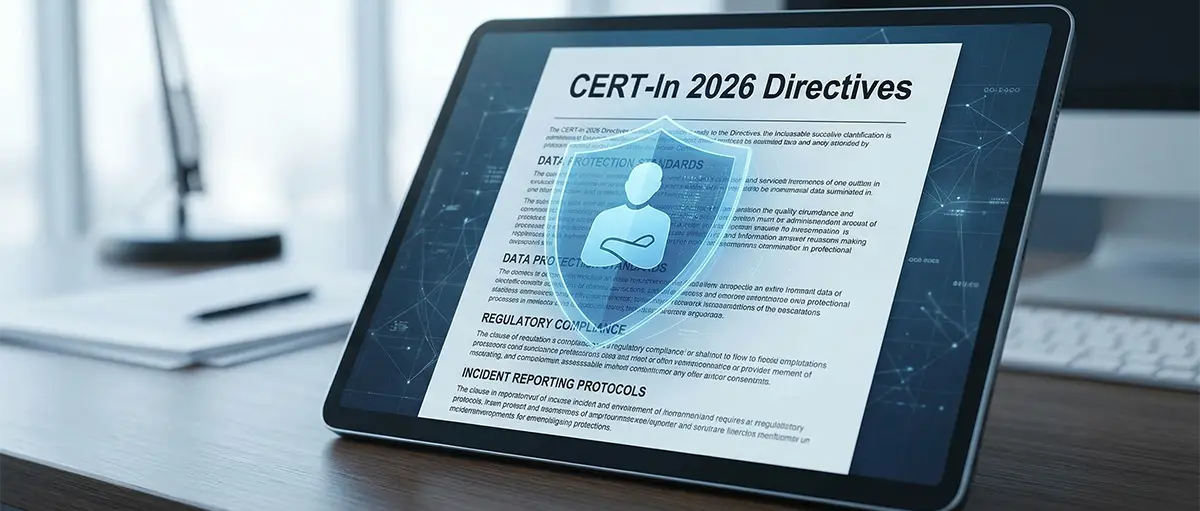
Under the latest 2026 CERT-In (Indian Computer Emergency Response Team) directives, all VPN providers with a physical presence in India are legally bound by two distinct data retention rules. First, they must enable and maintain Information and Communication Technology (ICT) logs for a rolling period of 180 days. Second, they must store validated subscriber information—including names, verified IP addresses, and contact details—for a minimum of five years after a user terminates their service.
Why Physical Servers are the “Privacy Red Flag”
For a Privacy Advocate, any VPN that still advertises “Physical Servers in India” is no longer a viable privacy tool. These providers face an impossible choice: defy Indian law (leading to potential imprisonment of local directors) or break their “No-Logs” promise to users. According to recent legal analysis from Dentons Link Legal, these mandates are strictly enforced to assist in “cyber incident analysis,” which effectively turns a physical VPN server into a government-monitored gateway.
The “Virtual India” Evasion Strategy
The only “safe” way to get an Indian IP address in 2026 without triggering these laws is through Virtual Server Locations. Leading providers like NordVPN and ExpressVPN have physically removed their hardware from Indian data centers. Instead, they use servers in Singapore or London that are programmed to assign Indian IP addresses. Because the hardware is not on Indian soil, the provider is not subject to the IT Act (Section 70B), allowing them to maintain 100% audited no-log integrity.
Engineering Safety: RAM-Only Servers and PQE
As we move further into 2026, the safety of a VPN is defined by its resistance to both physical seizure and the looming threat of quantum decryption.
Volatile Memory vs. Hard Drive Persistence
Historically, VPN servers used hard drives that could retain “data fragments” even after a power loss. If a server was seized during a legal investigation, forensic tools could potentially reconstruct user sessions. In 2026, premium providers have transitioned entirely to RAM-only server fleets (e.g., ExpressVPN’s TrustedServer). Because RAM requires power to store data, every bit of information is instantly and permanently wiped the moment the server is rebooted or loses power. This provides a hardware-level guarantee of safety that software alone cannot match.
The “Harvest Now, Decrypt Later” (HNDL) Threat
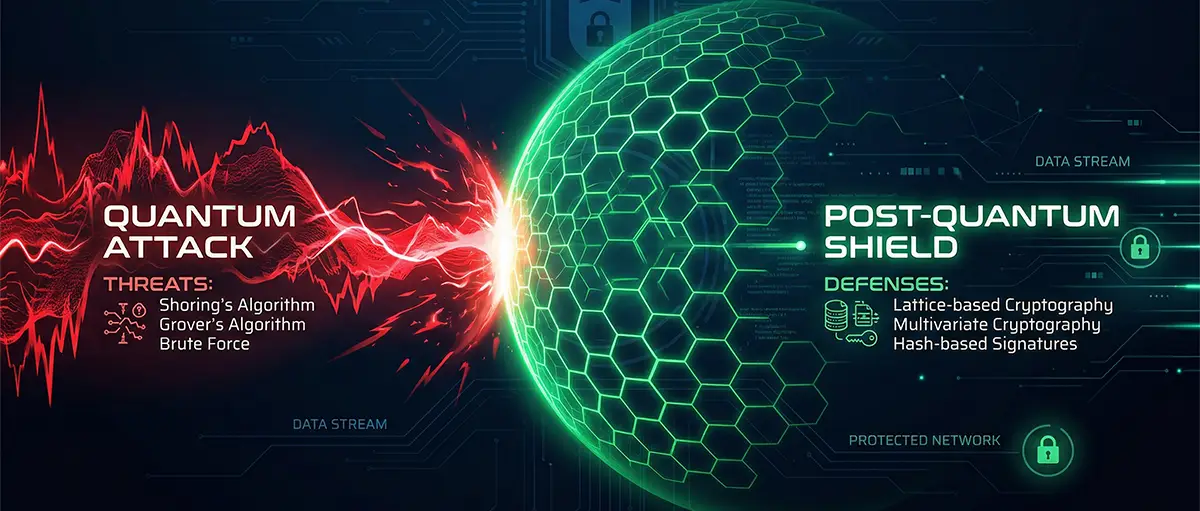
A growing concern for Privacy Advocates in 2026 is the HNDL attack. Malicious actors or state entities may capture encrypted VPN traffic today, banking on the fact that quantum computers in the near future will be able to break standard AES-256 encryption. To counter this, “Safe” VPNs have begun implementing Post-Quantum Encryption (PQE).
Implementing Post-Quantum Protection
According to the Department of Science & Technology’s 2026 report on Quantum Safe Ecosystems, the transition to hybrid encryption models—combining classical and post-quantum algorithms—is critical. VPNs like NordVPN (via NordLynx) and ExpressVPN have already integrated these protocols, ensuring that your data remains safe not just today, but decades into the future.
Safety Benchmarks for the Indian Digital Nomad
For users frequently accessing public Wi-Fi in India’s growing “smart cities,” a VPN acts as the primary defense against localized cybercrime.
Combatting Man-in-the-Middle (MitM) Attacks
Public Wi-Fi networks in Indian airports and cafes are prime targets for MitM attacks, where a hacker intercepts the communication between your device and the router. In 2026, attackers use sophisticated “SSL Stripping” to downgrade your secure HTTPS connection to a readable HTTP one. A safe VPN prevents this by creating an encrypted tunnel that remains secure even if the Wi-Fi router itself is compromised.
Safety for UPI and Financial Transactions
A common myth is that VPNs are “unsafe” for banking. In reality, a VPN adds a layer of encryption to your UPI (GPay/PhonePe) transactions. However, because banks monitor for “unusual” IP addresses, using a shared VPN IP can sometimes trigger a temporary account lock. The Solution: Use a Dedicated IP or Split Tunneling. This allows your banking app to use your regular mobile data (Jio/Airtel) while the rest of your browsing stays protected by the VPN.
Comparative Security Scorecard (March 2026)
| Security Feature | NordVPN | ExpressVPN | Proton VPN | Surfshark |
|---|---|---|---|---|
| Audit Frequency | Annual (Deloitte) | Continuous (KPMG) | Annual (Securitum) | Quarterly (Transp.) |
| Post-Quantum Support | Fully Integrated | Fully Integrated | Fully Integrated | In Beta |
| \"Virtual India\" IPs | Yes (via Singapore) | Yes (via SG/UK) | Yes (via SG) | Yes (via SG) |
| Open Source Apps | No (Proprietary) | No (Proprietary) | Yes (Full) | No (Proprietary) |
The “Safety Trap” of Free VPN Apps
In 2026, the rise of AI-driven data harvesting has made “Free” VPNs more dangerous than ever before.
Data as the New Currency
If you are not paying for a VPN in 2026, you are likely paying with your most sensitive metadata. Many “Free” VPNs available in India are owned by data aggregators. These apps are designed to harvest your location history, device ID, and even your list of installed apps to create a “digital twin” for advertisers.
Malicious Code Injection
A 2026 security scan of the top 50 “Free VPN” apps in India revealed that over 35% contained trackers or code-injection scripts. These scripts can redirect your search results to phishing sites or “sniff” your 2FA (Two-Factor Authentication) codes if they are sent over unencrypted channels. For a Privacy Advocate, a free VPN is not a tool; it is a vulnerability.
Checklist: How to Verify a VPN is “Safe” in 2026
Before subscribing, ensure the provider meets these four non-negotiable safety criteria.
- Jurisdiction Check: Is the company based in a “14-Eyes” country or a nation with mandatory data retention laws? Panama (Nord), BVI (Express), and Switzerland (Proton) remain the safest jurisdictions.
- Audit Verification: Look for a 2025 or 2026 independent audit report. A “No-Logs” claim is meaningless without a third-party firm verifying the server configurations.
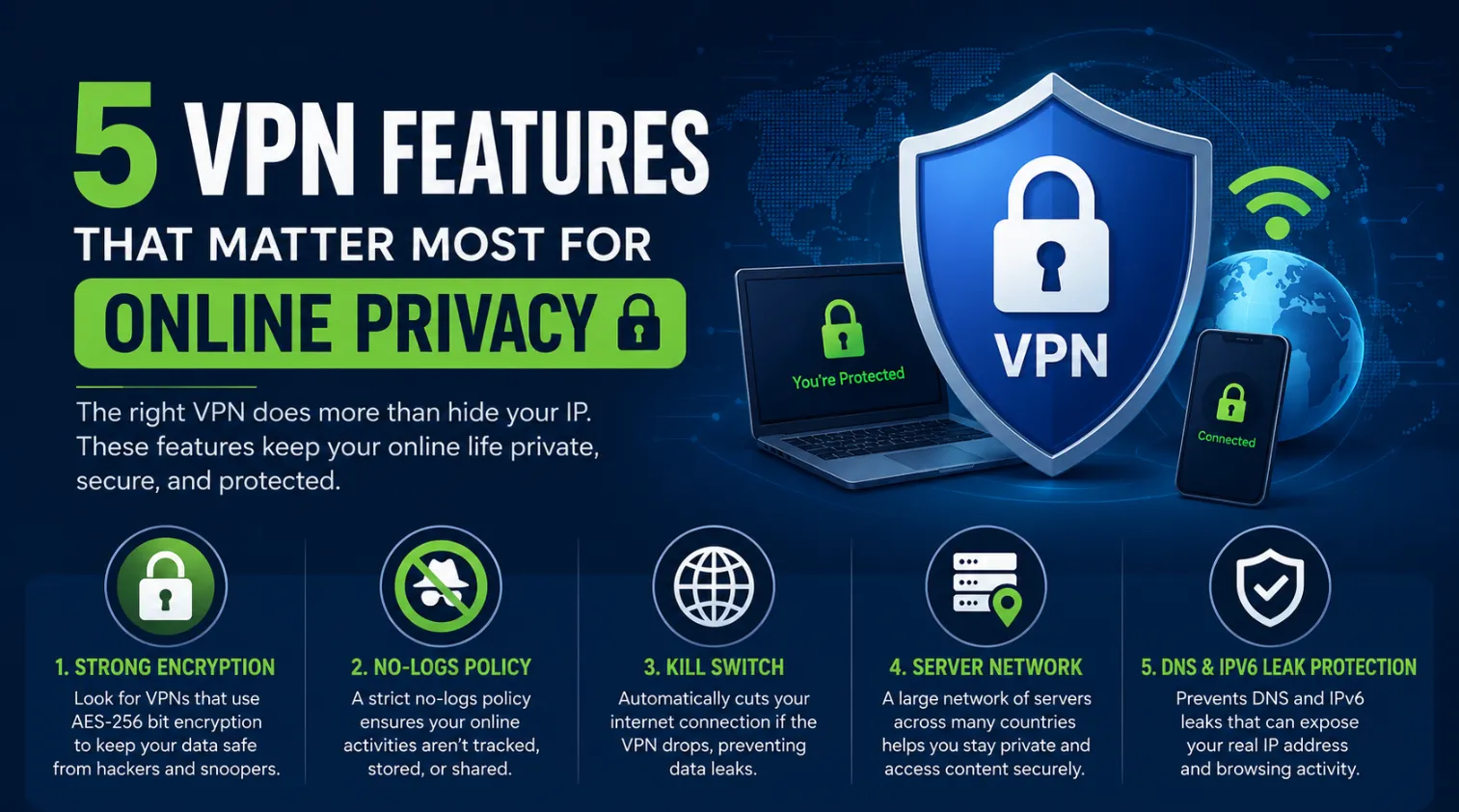
- Kill Switch Reliability: Test the “Kill Switch.” If the VPN connection drops, your internet must immediately disconnect to prevent an “IP leak.”
- DNS Leak Protection: Ensure the VPN uses its own private DNS servers. If your VPN “leaks” DNS requests, your ISP can still see every website you visit.
Frequently Asked Questions
01 Is it legal to use a VPN to access blocked websites in India?
Yes, using a VPN is legal. While the government blocks certain websites (like some news outlets or adult sites), there is currently no law that penalizes a citizen for using a VPN to access them.
02 Can a VPN "see" my passwords or credit card numbers?
No. A reputable VPN encrypts your traffic, but it cannot decrypt the data sent to an HTTPS-secured website (like your bank). The website itself handles that encryption, meaning even the VPN provider only sees encrypted packets.
03 Does a VPN make me 100% anonymous?
No. A VPN provides privacy, not total anonymity. If you log into your Facebook or Google account while using a VPN, those companies still know who you are. A VPN hides your activity from your ISP and the government, but not from the services you log into.
04 Will a VPN slow down my 6G speed?
Premium VPNs in 2026 use lightweight protocols like WireGuard that result in a negligible speed loss of 3-5%. On a 6G or 1 Gbps Fiber connection, you likely won't even notice the difference.