
Have you ever visited your website and noticed that it takes forever to load? Or maybe you’ve seen more visitors coming to your site, but your website seems to struggle to keep up. If so, your web hosting plan could be the reason.
Many website owners start with a basic hosting plan because it’s affordable and works well in the beginning. However, as a website grows, its needs change. A hosting plan that once seemed perfect may no longer provide the speed, performance, and reliability your website requires.
Scroll down to get the complete info regarding the signs that you should not miss to upgrade your hosting plan.
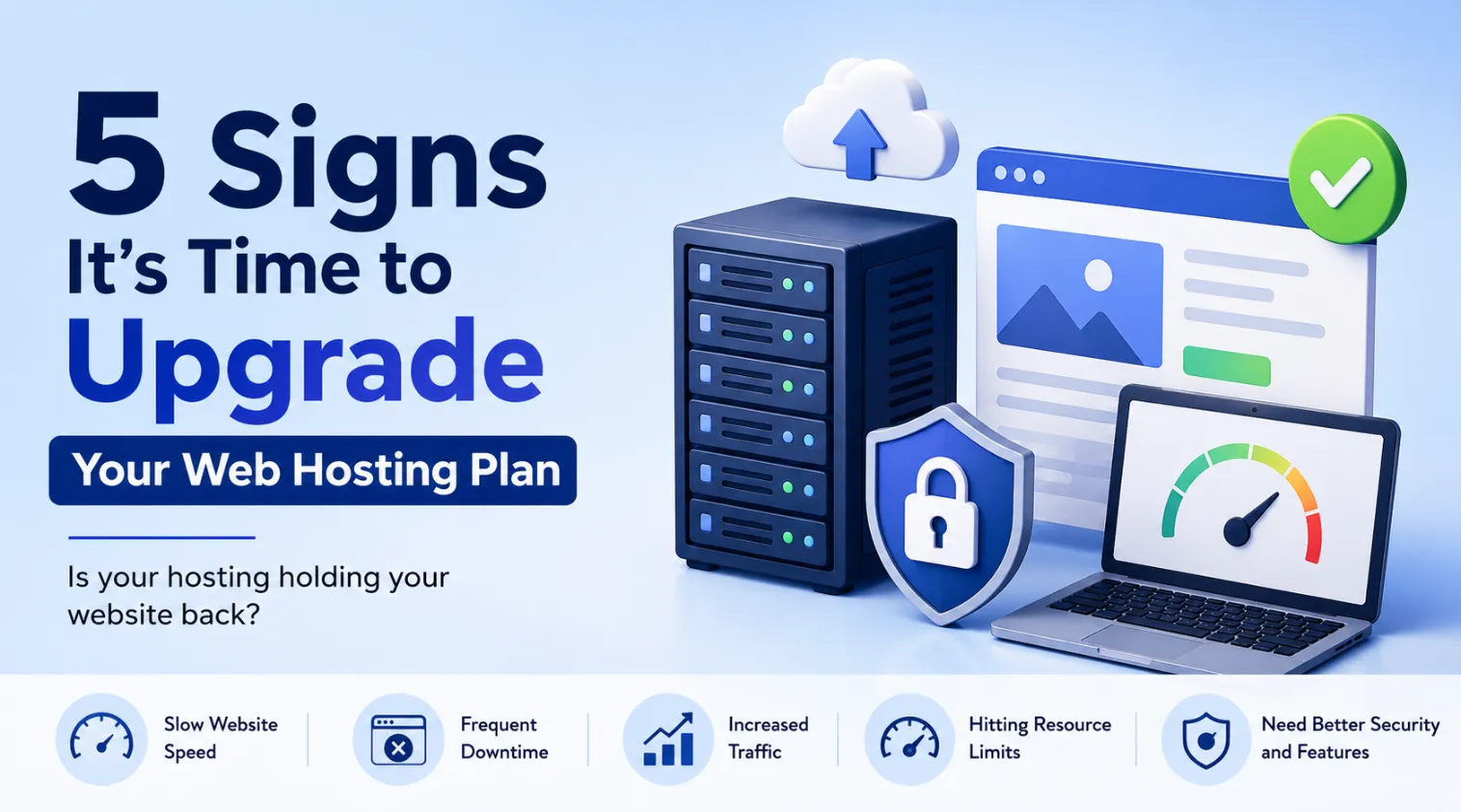
Time to Upgrade Your Web Hosting Plan: 5 Major Signs
Ignoring the signs of an outdated hosting plan can lead to slow loading times, poor user experience, and even lost customers. That’s why it’s important to know when it’s time to upgrade. Here are five clear signs that your website has outgrown its current hosting plan.
1. Your Website Is Loading Slowly
Website speed matters more than ever. People expect websites to load quickly, and if a page takes too long, many visitors will leave before it even opens. If you’ve noticed your website becoming slower over time, your hosting plan may not have enough resources to handle your traffic and content. This is especially common for websites that have added more pages, images, videos, or plugins.
Slow websites can also affect search engine rankings. Search engines like Google consider page speed when deciding where to place websites in search results. A slower site may struggle to rank well, making it harder for potential customers to find you. Upgrading your hosting plan can provide more processing power, memory, and storage, helping your website load faster and perform better.
2. Your Website Experiences Frequent Downtime
Downtime happens when your website becomes unavailable to visitors. While occasional maintenance is normal, frequent outages are a serious problem. Imagine a customer trying to visit your online store only to find that the website isn’t working. They will likely leave and visit a competitor instead. Every minute of downtime can mean lost sales, missed opportunities, and damage to your reputation.
Many entry-level hosting plans place multiple websites on the same server. If one website consumes too many resources, others on the server can be affected. This can lead to unexpected downtime and performance issues. If your website is regularly unavailable or you’re receiving complaints from users about access problems, upgrading to a more reliable hosting solution may be the right move.
3. Your Traffic Has Increased Significantly
Growing website traffic is great news. It means more people are discovering your business, reading your content, or purchasing your products. However, increased traffic also places greater demands on your hosting environment. A hosting plan designed for a few hundred visitors each month may struggle when thousands of users start visiting your site.
Some common warning signs include:
- Pages taking longer to load during busy periods
- Error messages appearing when traffic spikes
- Website crashes during promotions or special events
- Slow checkout processes for online stores
If your website traffic is steadily increasing, it’s wise to upgrade before performance problems begin affecting visitors. A stronger hosting plan ensures your site can handle growth smoothly without sacrificing speed or reliability.
4. You’re Constantly Hitting Resource Limits
Most hosting providers set limits on resources such as bandwidth, storage space, CPU usage, and memory. When your website reaches these limits, you may receive warning emails from your hosting provider. In some cases, your website may slow down significantly or certain features may stop working properly.
Common signs include:
- Storage space running low
- Bandwidth usage reaching monthly limits
- Frequent notifications from your hosting provider
- Reduced website performance during peak hours
If you’re regularly monitoring your resource usage and finding that you’re close to the limit, that’s a strong indication that your current plan is no longer sufficient. Upgrading gives your website access to additional resources, helping it run smoothly and reducing the risk of unexpected interruptions.
5. Your Business Needs Better Security and Features
As websites grow, security becomes increasingly important. Cyber threats continue to evolve, and basic hosting plans may not offer the level of protection your business needs.
Many advanced hosting plans include valuable features such as:
- Enhanced security protection
- Automatic backups
- Advanced firewalls
- Malware scanning
- Improved SSL support
- Dedicated resources
- Better technical support
If your website handles customer information, online payments, or sensitive business data, investing in a stronger hosting plan is often a smart decision. Beyond security, upgraded plans frequently provide tools that make website management easier and more efficient. These additional features can save time, improve performance, and offer greater peace of mind.
How to Know Which Hosting Upgrade Is Right for You?
Once you’ve decided to upgrade, the next step is choosing the right hosting solution. For growing websites, a Virtual Private Server (VPS) can provide more control and dedicated resources. Businesses with high traffic or demanding applications may benefit from dedicated hosting or cloud hosting solutions.
Before upgrading, consider:
- Your current traffic levels
- Expected future growth
- Website type and functionality
- Security requirements
- Budget
The best hosting plan is one that supports your current needs while giving you room to grow.
Final Thoughts
Your website is one of your most valuable business assets, and its performance depends heavily on the quality of its hosting. If your site is loading slowly, experiencing downtime, attracting more visitors than your current plan can handle, reaching resource limits, or requiring stronger security, it may be time for an upgrade. A better hosting plan can improve speed, reliability, security, and user experience, helping your website perform at its best. Rather than waiting for problems to become serious, upgrading at the right time can support your growth and keep visitors happy. Pay attention to these signs, and you’ll be better prepared to give your website the strong foundation it needs for long-term success.
Frequently Asked Questions
01 How do I know if my current web hosting plan is slowing down my website?
If your website takes longer than usual to load, frequently lags during peak traffic hours, or receives complaints from visitors about speed issues, your hosting plan may not have enough resources to support your site's current demands.
02 Will upgrading my web hosting plan improve my website's SEO?
Yes. A faster and more reliable website can improve user experience, reduce bounce rates, and help search engines crawl your pages more efficiently. While hosting alone won't guarantee higher rankings, better performance can positively impact SEO.
03 What is the best hosting upgrade for a growing website?
The right upgrade depends on your website's needs. Small to medium-sized websites often benefit from VPS hosting, while high-traffic websites or online stores may perform better on cloud hosting or dedicated servers that offer greater resources and scalability.