
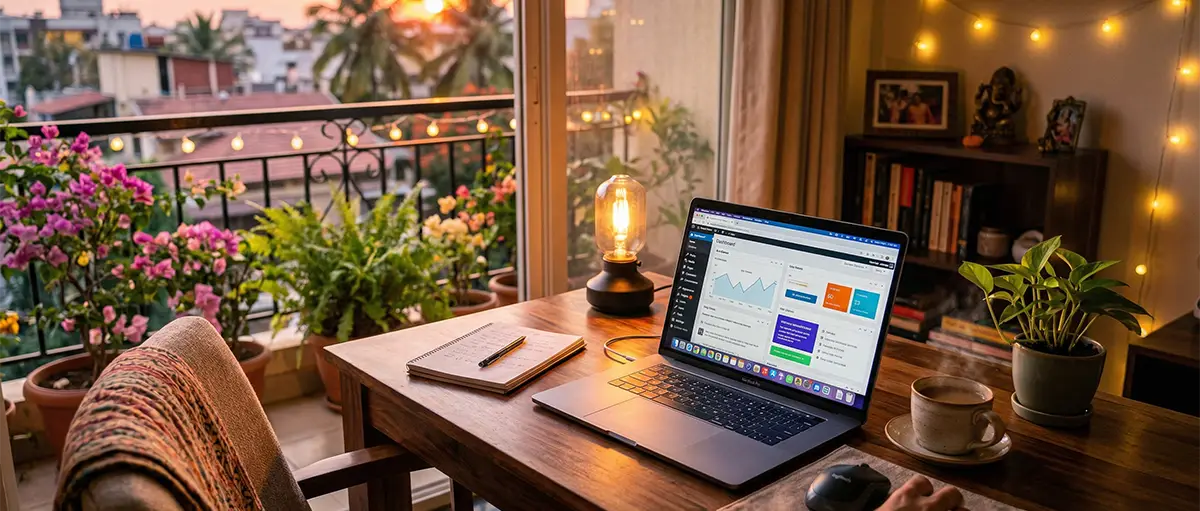
For side-hustle bloggers in 2026, the best web hosting in India is Hostinger India, offering entry-level plans starting at ₹69/month with full UPI payment support and localized Mumbai data centers. According to latest performance benchmarks, these plans deliver sub-20ms latency across major Indian metros, ensuring your blog passes Google’s Core Web Vitals instantly.
The 2026 Landscape: Why Localized Hosting is Non-Negotiable
In 2026, Indian web hosting has shifted from “global-first” to “local-priority,” where server proximity and payment flexibility dictate a blog’s success.
The Impact of Mumbai-Based Data Centers
For a side-hustle blogger targeting an Indian audience, hosting your data on a US or UK server is a tactical error. Physical distance equals latency. Data from Kripesh Adwani’s 2026 speed tests indicates that hosting on a Mumbai-based server reduces Time to First Byte (TTFB) by up to 300% compared to international alternatives. This speed is a critical ranking factor for SEO in the competitive Indian blogging niche.

UPI and Localized Support Dynamics
The barrier to entry for Indian creators used to be the requirement of a credit card for international billing. In 2026, the top hosting providers in India will have fully integrated the UPI (Unified Payments Interface) stack. This allows bloggers to renew services via apps like GPay, PhonePe, or Paytm, avoiding the high conversion fees and automated forex blocks common with older billing systems.
Architecture for 2026 Performance
Modern hosting in 2026 utilizes NVMe storage and LiteSpeed caching as standard features to handle sudden traffic spikes from social media viral loops.
NVMe Storage vs. Standard SSD: The Speed Gap
The “Technical Architecture” of cheap hosting in India has evolved significantly. While older plans relied on standard SSDs, the 2026 standard for providers like Hostinger India is NVMe (Non-Volatile Memory Express).
NVMe drives offer up to 10x higher throughput than SATA SSDs. For a blogger, this means the WordPress dashboard loads instantly, and database-intensive tasks—like running an SEO audit plugin or bulk uploading images—don’t result in “504 Gateway Timeout” errors. In a side-hustle environment where time is your most limited resource, a snappy backend saves hours of administrative frustration over the course of a year.
LiteSpeed Web Server Integration
Choosing a host that uses LiteSpeed instead of the older Apache server is the “secret sauce” for 2026. LiteSpeed’s server-level caching communicates directly with the LSCache plugin on WordPress, allowing your site to serve static versions of your pages to thousands of concurrent users without crashing the underlying server resources.
Object Caching and Redis Support
In 2026, even budget plans are beginning to offer Redis or Memcached support. This is vital for bloggers using complex themes or WooCommerce elements. Object caching stores database query results in the RAM, meaning the server doesn’t have to “work” as hard to display your most popular blog posts. When choosing a top hosting provider in India, always check whether “Object Caching” is enabled in the features list.
CDN Integration: The Edge Delivery Advantage
Even with a Mumbai server, a blogger should utilize a Content Delivery Network (CDN). Most premium Indian hosts now bundle Cloudflare Enterprise or their proprietary CDN. This ensures that if a reader in London or New York happens upon your “Indian Travel Guide,” they receive the content from a local node rather than waiting for it to travel across undersea cables from Mumbai.
Budgeting for Your First Profitable Year
Starting a side-hustle blog in India in 2026 requires an initial investment of roughly ₹3,500-₹5,500 for the first year, including domain and hosting.
The “Introductory Rate” vs. Renewal Reality
Many top hosting providers in India offer enticing introductory rates. For instance, Bluehost India may offer a 70% discount for the first 36 months. However, the “Ownership Economics” dictate that you must account for the renewal price, which can jump from ₹169/month to ₹499/month.
Hidden Costs: Privacy and Security
A major hidden cost in the Indian market is “Domain Privacy Protection.” Without it, your phone number and email linked to the domain registration are public, leading to endless spam calls from “SEO agencies” in Noida and Gurgaon. Many cheap hosting plans in India omit this, charging an extra ₹400-₹600. Look for “All-in-one” bundles that include privacy protection for your personal data.
2026 Side-Hustle Budget Breakdown
| Item | Estimated Annual Cost | Strategy Tip |
|---|---|---|
| Starter Shared Hosting | ₹1,800 - ₹3,600 | Look for \"Free Domain\" bundles. |
| .in or .com Domain | ₹600 - ₹1,200 | .in is often cheaper for local blogs. |
| Premium Theme/Plugins | ₹0 - ₹4,000 | Stick to free versions initially. |
| Privacy & SSL | ₹0 - ₹1,500 | Should be free in 2026. |
| Total Estimated Launch Cost | ₹2,400 - ₹10,300 | Approx. ₹200 - ₹850 per month. |
Maximizing ROI with Free Add-ons
To keep costs low, prioritize hosts that include a free SSL certificate (standard in 2026), free daily backups, and at least 5 professional email accounts (e.g., [email protected]). These add-ons save you an additional ₹2,000 per year in third-party subscriptions. For a side-hustle blogger, every rupee saved is a rupee that can be reinvested into content creation or social media ads.
Comparative Analysis: The Titans of Indian Hosting
Hostinger and Bluehost remain the dominant forces for Indian bloggers, but they serve different technical needs.
Hostinger India: The Speed & Value King
Hostinger has optimized its stack for the “Side-Hustle” persona. Their hPanel is more intuitive than the traditional cPanel, making it easier for non-tech-savvy bloggers to manage their sites. According to Forbes Advisor India’s 2026 review, Hostinger consistently ranks #1 for price-to-performance ratio in the Indian subcontinent. Their data center in Mumbai ensures that your WordPress dashboard responds in milliseconds, not seconds.
Bluehost India: The Reliability & Support Choice
Bluehost is the “Gold Standard” for those who prioritize peace of mind. As an officially recommended host by WordPress.org, their integration is seamless. Their 2026 advantage lies in their “Blue Sky” support, which provides localized assistance for WordPress-specific issues, not just server problems. If you are worried about technical glitches, the extra ₹20-₹30 per month for Bluehost is effectively an insurance policy for your blog’s uptime.
Performance Spec Comparison
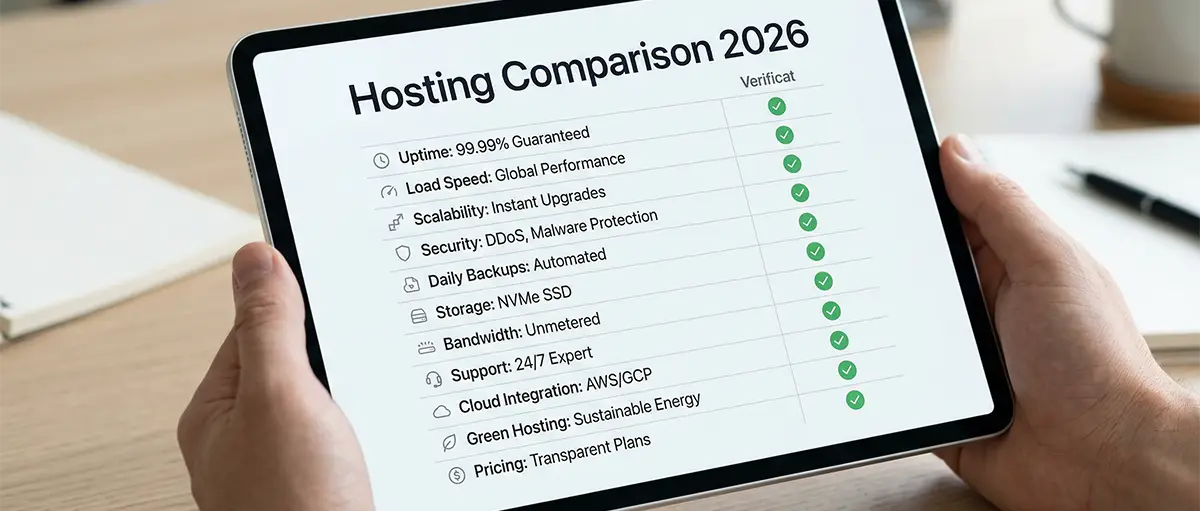
| Feature | Hostinger India | Bluehost India | A2 Hosting |
|---|---|---|---|
| Starting Price | ~₹149/mo | ~₹169/mo | ~₹249/mo |
| Data Center | Mumbai, India | Mumbai / US | Singapore / US |
| Storage Type | 100GB NVMe | 50GB SSD | 100GB SSD |
| PHP Version | 8.3+ Supported | 8.2+ Supported | 8.3+ Supported |
| Free Domain | Yes (1st Year) | Yes (1st Year) | No |
| Support | 24/7 Chat (Multi-lingual) | 24/7 Phone & Chat | 24/7 Guru Support |
Local Niche Contenders: A2 Hosting and SiteGround
While Hostinger and Bluehost dominate, A2 Hosting is a strong contender for those who need “Turbo” speeds. Their Singapore data center serves South India (Chennai/Bangalore) with incredibly low latency. SiteGround, while significantly more expensive (often billed in USD), offers the highest level of security and managed service, making it the “upgrade path” once your side-hustle begins generating over ₹50,000 in monthly revenue.
Moving Your Blog Without Downtime
For many bloggers, the fear of “breaking” their site keeps them on slow, expensive hosts. In 2026, migration is automated.
1-Click Migration Tools
Providers like Hostinger offer a “Request Migration” button within their dashboard. You simply provide the login details of your old host, and their team (or an automated script) moves your files and databases. This is a critical feature to look for if you are currently stuck on a host with poor Indian connectivity.
DNS Propagation in 2026
In the past, changing hosts meant your site would be “down” for 24-48 hours while DNS updated globally. With modern DNS providers and the rollout of faster internet infrastructure across India (5G and Fiber), propagation now typically takes less than 2 hours. Using a service like Cloudflare can make this transition near-instantaneous.
Frequently Asked Questions
01 Which cheap hosting in India allows UPI/Paytm payments in 2026?
Most major providers like Hostinger, Bluehost India, and BigRock now fully support UPI, Paytm, and NetBanking specifically for the Indian market.
02 Is Hostinger India faster than Bluehost for WordPress blogs?
In recent 2026 benchmarks, Hostinger’s NVMe-based plans generally outperform Bluehost’s entry-level SSD plans in raw TTFB tests within India, though Bluehost offers superior uptime stability.
03 How much does it cost to renew a '.in' domain and hosting after 1 year?
Typically, renewal for a .in domain is around ₹700-₹900, while hosting renewals usually return to the "regular" rate, which is often 2x to 3x the introductory price.
04 Best Indian hosting with Mumbai data centers for low latency?
Hostinger, Bluehost India, and A2 Hosting are the top choices offering dedicated Mumbai data center options in 2026.
05 Can I use AI website builders for free with Indian hosting plans?
Yes, most 2026 hosting packages now include a proprietary AI Website Builder that allows you to generate a blog layout in under 60 seconds at no extra cost.
06 Does "Free SSL" matter for a new blog?
Absolutely. Without an SSL (HTTPS), Google Chrome will mark your site as "Not Secure," which scares away visitors and destroys your SEO rankings. Never pay extra for a basic SSL in 2026.