
Starting a blog is easier than ever, but choosing the right web hosting provider can be overwhelming. With hundreds of hosting companies competing for attention, bloggers often struggle to decide which service offers the best balance of speed, reliability, features, and affordability.
The truth is that your hosting provider plays a crucial role in your blog’s success. A slow website can drive visitors away, while frequent downtime can hurt your search engine rankings and credibility. Whether you’re launching your first personal blog or managing a growing content website, selecting the right hosting service is one of the most important decisions you’ll make.
In this guide, we’ll explore the best web hosting services for bloggers in 2026 and help you find the perfect fit for your needs.
Why Good Hosting Matters for Bloggers
Many new bloggers focus on design and content but overlook hosting. However, hosting affects several critical aspects of your website, including:
- Website speed and performance
- Uptime and reliability
- Security and backups
- Search engine rankings
- User experience
- Ability to handle traffic growth
A quality hosting provider ensures your blog remains fast, secure, and accessible to visitors around the clock.
What Bloggers Should Look for in a Hosting Provider
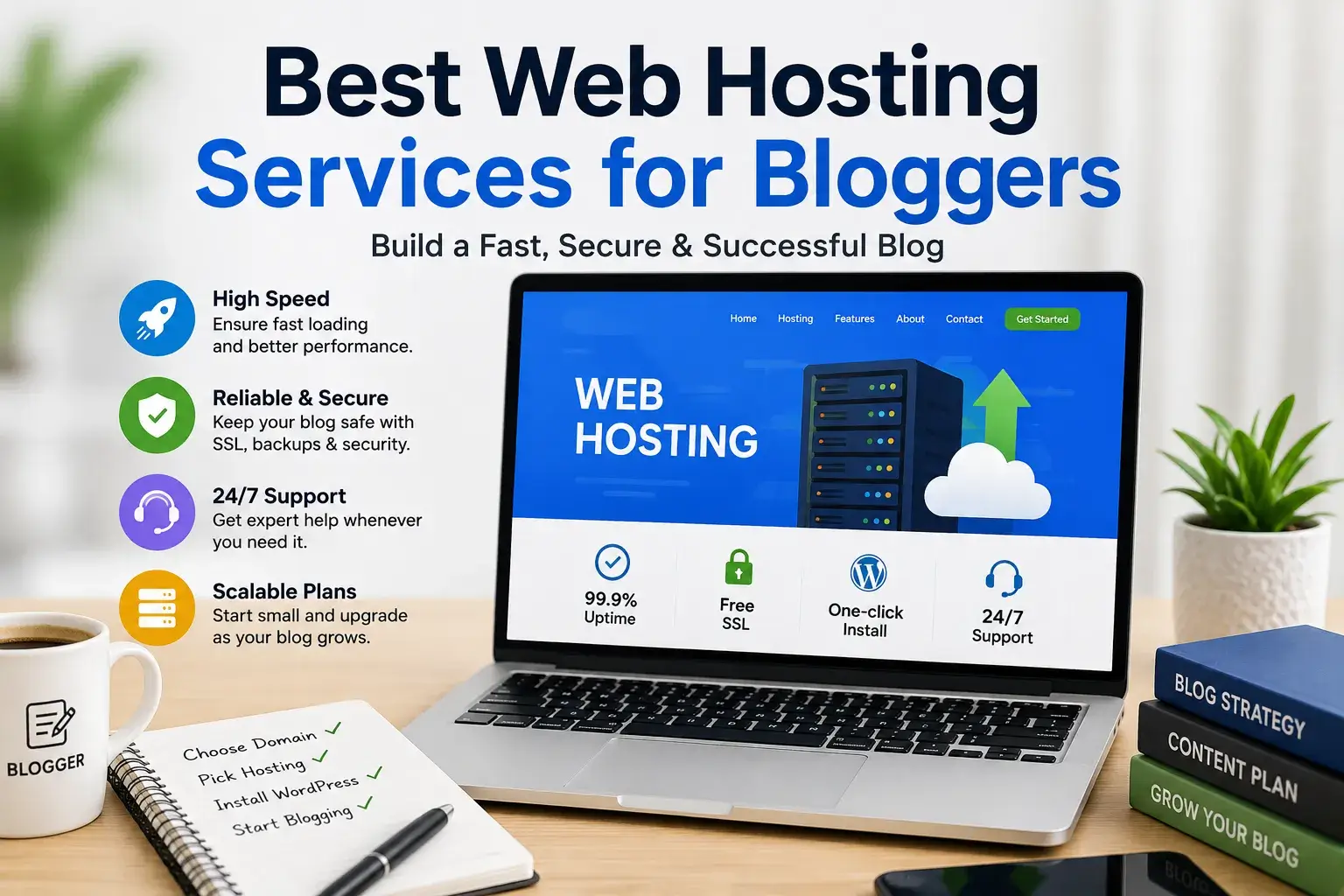
Before comparing hosting companies, consider the following factors:
Speed and Performance
Fast-loading websites provide a better user experience and can improve SEO rankings. Look for providers that use SSD storage, caching technologies, and global data centers.
Uptime Guarantee
Reliable hosting providers typically offer uptime guarantees of 99.9% or higher. Consistent uptime ensures visitors can access your blog whenever they want.
Ease of Use
If you’re a beginner, choose a host with a user-friendly control panel and one-click WordPress installation.
Customer Support
Technical issues can happen unexpectedly. Responsive customer support can save you time and frustration.
Pricing and Value
The cheapest option isn’t always the best. Evaluate the features included in each plan and consider long-term costs.
1. Hostinger
Best for Budget-Conscious Bloggers
Hostinger continues to be one of the most popular hosting providers among bloggers due to its affordable pricing and strong performance.
Key Features
- Free SSL certificate
- One-click WordPress installation
- LiteSpeed servers
- Weekly or daily backups
- User-friendly hPanel
Pros
- ✅ Affordable plans
- ✅ Excellent loading speeds
- ✅ Easy setup process
- ✅ Global server locations
Cons
- ❌ Entry-level plans have some limitations
- ❌ Renewal prices are higher
Hostinger is an excellent choice for beginners looking to start a blog without spending a fortune.
2. Bluehost
Best for New WordPress Bloggers
Bluehost has long been recommended for WordPress users and remains a popular option for beginners.
Key Features
- Free domain for the first year
- WordPress integration
- Free SSL certificate
- 24/7 customer support
Pros
- ✅ Beginner-friendly interface
- ✅ Easy WordPress setup
- ✅ Good uptime performance
Cons
- ❌ Average loading speeds compared to competitors
- ❌ Upselling during checkout
Bluehost is ideal for bloggers who want a straightforward WordPress hosting experience.
3. SiteGround
Best for Speed and Customer Support
SiteGround is known for its premium performance and exceptional customer service.
Key Features
- Managed WordPress hosting
- Daily backups
- Advanced security tools
- Built-in caching
Pros
- ✅ Excellent support team
- ✅ Fast website performance
- ✅ Strong security features
Cons
- ❌ Higher pricing than budget hosts
- ❌ Limited storage on entry plans
SiteGround works particularly well for bloggers who prioritize website performance and reliability.
4. A2 Hosting
Best for Performance-Focused Bloggers
A2 Hosting has built a reputation around speed and optimization.
Key Features
- Turbo servers
- Free website migration
- SSD storage
- Developer-friendly tools
Pros
- ✅ Fast page-loading times
- ✅ Flexible hosting options
- ✅ Reliable uptime
Cons
- ❌ Turbo plans cost more
- ❌ Interface can feel dated
For bloggers seeking maximum performance, A2 Hosting is worth considering.
5. DreamHost
Best for Long-Term Value
DreamHost offers transparent pricing and a strong feature set.
Key Features
- Free SSL certificate
- Automated WordPress updates
- Unlimited traffic
- Daily backups
Pros
- ✅ Competitive long-term pricing
- ✅ Strong privacy protection
- ✅ Reliable uptime
Cons
- ❌ Custom control panel may require adjustment
- ❌ Limited live support hours
DreamHost is a great option for bloggers planning to build a long-term online presence.
6. Cloudways
Best for Growing Blogs
Cloudways provides managed cloud hosting that combines flexibility with strong performance.
Key Features
- Cloud infrastructure
- Built-in caching
- Managed security
- Scalability options
Pros
- ✅ Excellent performance
- ✅ Flexible resource allocation
- ✅ Suitable for high-traffic blogs
Cons
- ❌ More advanced than beginner hosting
- ❌ Higher starting costs
As your blog grows, Cloudways can provide the resources needed to handle increasing traffic.
Shared Hosting vs Managed WordPress Hosting
Many bloggers wonder whether they should choose shared hosting or managed WordPress hosting.
Shared Hosting Shared hosting is affordable and beginner-friendly. Multiple websites share the same server resources, making it ideal for new blogs with limited traffic.
Managed WordPress Hosting Managed WordPress hosting includes specialized optimizations, automatic updates, enhanced security, and dedicated support for WordPress websites.
If you’re just starting, shared hosting is usually sufficient. As your blog grows, upgrading to managed WordPress hosting may provide better performance and convenience.
Which Hosting Service Is Best for Different Types of Bloggers?
- New Bloggers: Hostinger, Bluehost
- Budget Bloggers: Hostinger, DreamHost
- Professional Bloggers: SiteGround, Cloudways
- High-Traffic Blogs: Cloudways, A2 Hosting
- WordPress-Focused Bloggers: Bluehost, SiteGround
Choosing a host based on your current needs and future growth plans can save you time and money.
Final Thoughts
The best web hosting service for bloggers depends on your goals, budget, and experience level. For beginners, Hostinger and Bluehost offer affordable and easy-to-use solutions. Bloggers seeking premium performance may prefer SiteGround or A2 Hosting, while growing websites can benefit from Cloudways’ scalability.
Remember that great hosting is an investment in your blog’s future. A fast, reliable, and secure website creates a better experience for readers and supports long-term growth.
Take the time to compare features, evaluate your needs, and choose a hosting provider that can grow alongside your blog.
Frequently Asked Questions
01 What is the best hosting for beginner bloggers?
Hostinger and Bluehost are among the best options for beginners because they offer affordable pricing, simple setup processes, and WordPress-friendly features.
02 Does web hosting affect SEO?
Yes. Hosting affects website speed, uptime, and user experience, all of which can influence search engine rankings.
03 Is shared hosting enough for a blog?
For most new blogs, shared hosting is more than sufficient. You can upgrade later as your traffic increases.