Have You Ever Wondered Who Can See Your Online Activity? Every time you browse the internet, stream videos, use public Wi-Fi, or log into social media accounts, your online activity leaves behind digital footprints.
Many people today want better privacy online, which is why tools like VPNs and proxies have become so popular. But while both are designed to hide your IP address and improve privacy, they are not the same thing.
A lot of users get confused between the two because they seem similar on the surface. However, when it comes to security, privacy, and overall protection, there are major differences. Understanding how each one works can help you choose the right option for your needs.
What Is a VPN?
A VPN, short for Virtual Private Network, is a service that creates a secure and encrypted connection between your device and the internet. In simple terms, it acts like a protective tunnel for your online activity. When you connect to a VPN, your internet traffic passes through a secure server before reaching the websites you visit. This process hides your real IP address and encrypts your data, making it difficult for hackers, internet providers, or even public Wi-Fi networks to track what you are doing online. VPNs are commonly used by people who want safer browsing, better privacy, and protection while using public internet connections. They are also useful for remote workers, travelers, and anyone concerned about online tracking.
What Is a Proxy?
A proxy server works differently. It acts as a middleman between your device and the website you want to access. Instead of connecting directly to a website, your request first goes through the proxy server. This helps hide your IP address because websites only see the proxy server’s IP instead of yours. Many people use proxies to access blocked websites or bypass regional restrictions. However, most proxies do not encrypt your internet traffic. This means your online activity may still be visible to your internet provider, hackers, or network administrators. While a proxy can provide a basic level of anonymity, it does not offer the same level of protection as a VPN.
The Biggest Difference Between VPN and Proxy
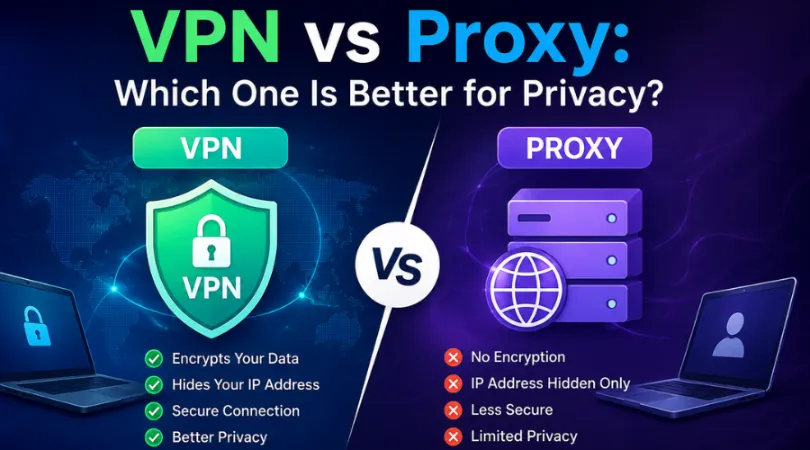
The main difference between a VPN and a proxy is encryption. A VPN encrypts your internet traffic, which means your data becomes unreadable to outsiders. This extra layer of security protects sensitive information such as passwords, banking details, emails, and personal messages. A proxy, on the other hand, usually only hides your IP address without encrypting your connection. It changes your virtual location, but it does not fully protect your online activity.
You can think of it this way:
- A proxy hides where you are.
- A VPN hides where you are and protects what you are doing.
This is why VPNs are generally considered much safer for privacy.
Which One Offers Better Privacy?
As VPNs encrypt your internet traffic, they make it much harder for anyone to monitor your browsing activity. This is especially important when using public Wi-Fi at airports, cafés, hotels, or shopping malls, where cybercriminals often target unsecured connections.
A proxy only hides your IP address. Your browsing activity may still be exposed because there is no encryption protecting your data. In many cases, free proxy servers may even track your activity themselves.
If privacy is your main concern, a VPN is clearly the better choice. For users who care about online privacy, a VPN provides much stronger protection.
What About Speed?
One area where proxies sometimes perform better is speed. Since proxies usually do not encrypt data, they require less processing power and can feel slightly faster. VPNs may reduce internet speed a little because encryption takes extra resources. However, modern VPN services have improved significantly over the years, and many users hardly notice the difference during browsing or streaming. For basic browsing, a proxy may feel quicker. But for secure and private internet use, most people are willing to sacrifice a small amount of speed for better protection.
Are Free VPNs and Proxies Safe?
Many people search for free VPNs or free proxies to save money, but this can sometimes create more risks than benefits.
Some free services may:
- Track your browsing activity
- Sell your data to advertisers
- Show excessive ads
- Leak your real IP address
- Offer poor security protection
Not every free service is unsafe, but users should always be careful before trusting unknown providers with their internet traffic. If online privacy matters to you, choosing a trusted VPN service with a strong reputation and a no-logs policy is usually the safer option.
When Should You Use a Proxy?
A proxy can still be useful in certain situations. If you simply want to access a region-blocked website or quickly hide your IP address for low-risk activities, a proxy may be enough. Some people also use proxies for casual browsing or simple tasks where security is not a major concern. Since proxies are lightweight and often faster, they can work well for temporary use. However, proxies are not ideal for handling sensitive information or protecting personal data.
When Should You Use a VPN?
A VPN is a better choice if you regularly use public Wi-Fi, access banking apps, work remotely, or simply want stronger online privacy. VPNs are designed to protect your entire internet connection, including apps, browsers, games, and streaming platforms. This makes them much more effective for overall security. As online tracking, cybercrime, and data collection continue to grow, more internet users are turning to VPNs for better protection.
Pros
- ✅ A VPN encrypts all your internet traffic for maximum security
- ✅ A VPN protects your sensitive data on public Wi-Fi networks
- ✅ A proxy is lightweight and can be slightly faster for basic browsing
Cons
- ❌ A proxy does NOT encrypt your traffic, leaving data exposed
- ❌ Free proxies and VPNs may track and sell your browsing data
- ❌ A proxy only hides your IP but doesn't secure your connection
Final Thoughts
Both VPNs and proxies can help hide your IP address, but they are built for different purposes. A proxy is mainly useful for changing your virtual location or bypassing simple restrictions, while a VPN focuses on privacy, security, and encrypted browsing. If your goal is real online privacy and safer internet use, a VPN is the better option. It offers stronger protection, better security, and peace of mind while browsing online. A proxy may work for basic tasks, but when it comes to protecting your personal information, a VPN provides a much more complete solution.
Frequently Asked Questions
01 Is a VPN safer than a proxy?
Yes, a VPN is generally much safer than a proxy because it encrypts your internet traffic. This encryption protects your data from hackers, trackers, and even public Wi-Fi risks. A proxy usually only hides your IP address without securing your connection.
02 Can I use a VPN and proxy together?
Yes, some advanced users combine both for extra anonymity, but for most people, a VPN alone is enough. A good VPN already provides strong privacy, encryption, and IP masking without needing an additional proxy.
03 Does a VPN slow down internet speed?
A VPN can slightly reduce internet speed because it encrypts your data and routes it through secure servers. However, premium VPN services are now much faster, and most users do not notice a major difference during browsing, streaming, or video calls.