

When choosing a web hosting provider, you may often hear the term “uptime.” It is one of the most important factors that decides how reliable your website will be. Whether you run a blog, a business website, an online store, or a portfolio, uptime plays a huge role in your website’s success.
But what exactly is uptime in hosting, and why does it matter so much?
In this guide, we’ll explain everything in simple words so beginners can easily understand how uptime affects website performance, user experience, and even SEO rankings.
What Is Uptime in Hosting?
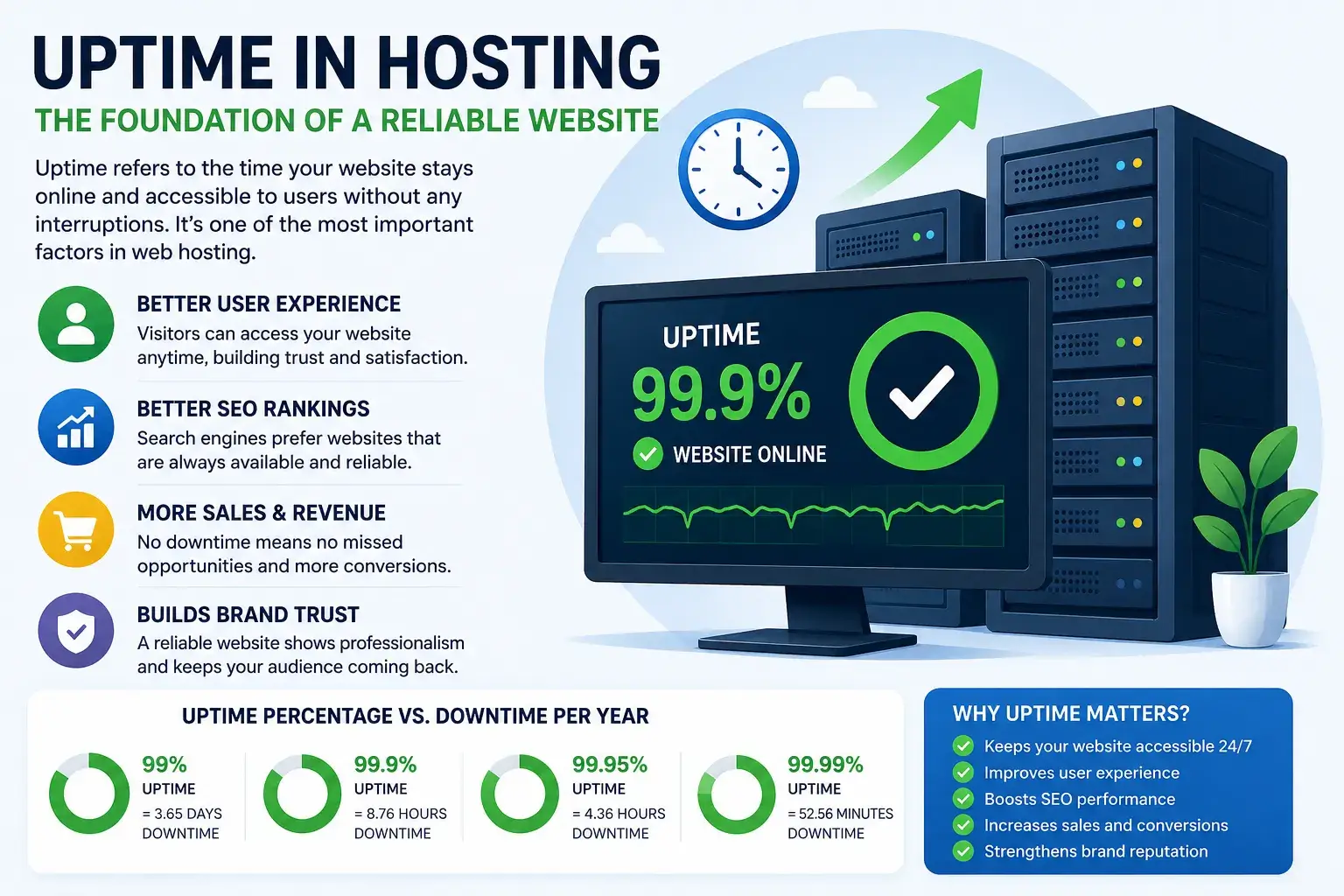
Uptime refers to the amount of time a website stays online and accessible to users without interruptions. It is usually shown as a percentage.
For example:
- 99% uptime means your website may experience several days of downtime in a year.
- 99.9% uptime means your website will only be down for a few hours annually.
- 99.99% uptime offers extremely high reliability with minimal downtime.
In simple words, uptime tells you how dependable your hosting provider is.
If your website is always available to visitors, your hosting has good uptime. If your site frequently goes offline, it has poor uptime.
What Is Downtime?
Downtime is the opposite of uptime. It happens when your website becomes unavailable due to server issues, maintenance, technical failures, or network problems.
During downtime:
- Visitors cannot access your website
- Sales and traffic may drop
- Users may lose trust in your brand
- Search engine rankings can suffer
Even a few minutes of downtime can affect websites that receive high traffic or run online businesses.
Why Uptime Matters for Your Website
Many beginners focus only on pricing when buying hosting. However, uptime is equally important because it directly affects your website’s performance and reputation.
Here are the biggest reasons why uptime matters.
1. Better User Experience
Imagine someone visiting your website and seeing an error page instead of your content. Most visitors will leave immediately and may never return.
A website with strong uptime:
- Loads consistently
- Builds trust among visitors
- Keeps users engaged
People expect websites to work 24/7. Good uptime helps you meet those expectations.
2. Improves SEO Rankings
Search engines like Google prefer websites that are reliable and accessible.
If your website experiences frequent downtime:
- Google bots may fail to crawl your pages
- Rankings may decrease
- Organic traffic can drop
While occasional downtime is normal, repeated server issues can negatively impact SEO performance over time.
That’s why many SEO experts recommend choosing hosting providers with at least 99.9% uptime guarantee.
3. Increases Sales and Revenue
For eCommerce websites, uptime is extremely important.
If your online store goes offline:
- Customers cannot place orders
- Payment processing stops
- Revenue is lost instantly
Even small businesses can lose potential customers during downtime.
For example, if your website goes down during a festive sale or product launch, you may miss valuable traffic and conversions.
4. Builds Brand Trust
A reliable website creates a professional image.
Frequent downtime can make visitors think:
- The business is unprofessional
- The website is unsafe
- The company is inactive
On the other hand, websites with excellent uptime appear trustworthy and dependable.
Understanding Uptime Percentages
Here’s a simple breakdown of how uptime percentages translate into downtime annually:
| Uptime Percentage | Approximate Downtime Per Year |
|---|---|
| 99% | Around 3.5 days |
| 99.9% | Around 8.7 hours |
| 99.95% | Around 4.3 hours |
| 99.99% | Around 52 minutes |
Tips to Improve Website Uptime
Here are some easy ways to keep your website online consistently:
- Choose a Reliable Hosting Provider: Always select a hosting company known for strong uptime performance.
- Use a Content Delivery Network (CDN): Helps distribute website traffic efficiently.
- Keep Software Updated: Update plugins, themes, and CMS regularly to avoid errors.
- Monitor Your Uptime: Use uptime monitoring tools to detect problems quickly.
- Upgrade Your Hosting Plan: If your traffic grows, move from shared hosting to VPS or cloud hosting.
Final Thoughts
Uptime is one of the most important factors in web hosting because it directly affects your website’s reliability, SEO, traffic, and sales.
A website that stays online consistently creates a better experience for users and helps build trust with both visitors and search engines.
When choosing hosting, don’t focus only on low prices. A slightly more expensive hosting plan with excellent uptime can save you from lost traffic, frustrated users, and missed business opportunities.
For most websites, choosing a hosting provider with at least 99.9% uptime is a smart and safe decision.
Frequently Asked Questions
01 What is considered good uptime for hosting?
A good hosting uptime is usually 99.9% or higher. This ensures minimal downtime throughout the year.
02 Does uptime affect SEO?
Yes, frequent downtime can negatively impact search engine rankings because search engines may struggle to access your website.
03 How can I monitor my website uptime?
You can use uptime monitoring tools that alert you whenever your website goes offline.